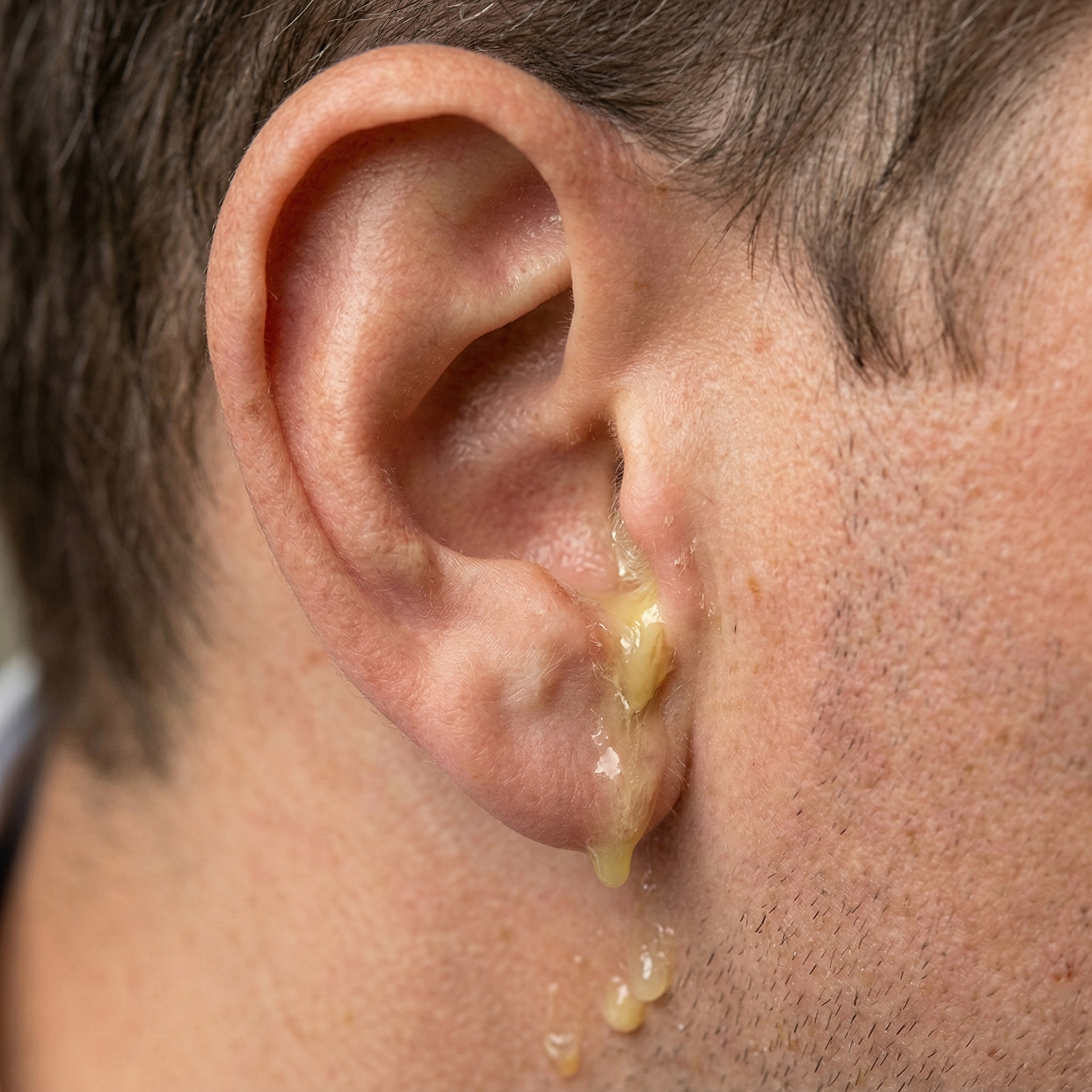
Ear Discharge

Ear Discharge Treatment

Ear discharge, medically known as otorrhea, refers to any fluid that comes out of the ear. This fluid may be clear, yellow, white, or even bloody depending on the cause. Ear discharge can occur due to infections, injury, or other ear conditions. While some minor cases may resolve on their own, persistent discharge should always be examined by a doctor to prevent complications and protect hearing health.

  1. Common Causes of Ear Discharge:
    • Ear Infection: Bacterial or viral infections can cause pus or fluid leakage.
    • Swimmer’s Ear: Infection of the outer ear canal due to moisture.
    • Ruptured Eardrum: A tear in the eardrum may lead to discharge.
    • Excess Earwax: Sometimes earwax buildup may cause irritation and fluid.
    • Foreign Object: Small objects stuck in the ear can lead to infection and discharge.
  1. Symptoms of Ear Discharge:
    • Fluid leaking from the ear
    • Ear pain or discomfort
    • Reduced hearing ability
    • Itching or irritation in the ear
    • Fever in case of infection
  2. Diagnosis:
    • Physical examination using an otoscope
    • Checking for infection or blockage
    • Hearing tests if required
    • Lab tests of discharge in severe cases
  3. Treatment Options:
    • Medications: Antibiotic or antifungal ear drops.
    • Cleaning the Ear: Removal of pus, wax, or debris.
    • Pain Relief: Medicines to reduce pain and inflammation.
    • Surgery: Required in rare cases if the eardrum is severely damaged.
  4. Prevention and Care:
    • Keep ears dry and clean
    • Avoid inserting sharp objects into the ear
    • Treat ear infections promptly
    • Use ear protection while swimming
    • Regular ear check-ups for early detection